
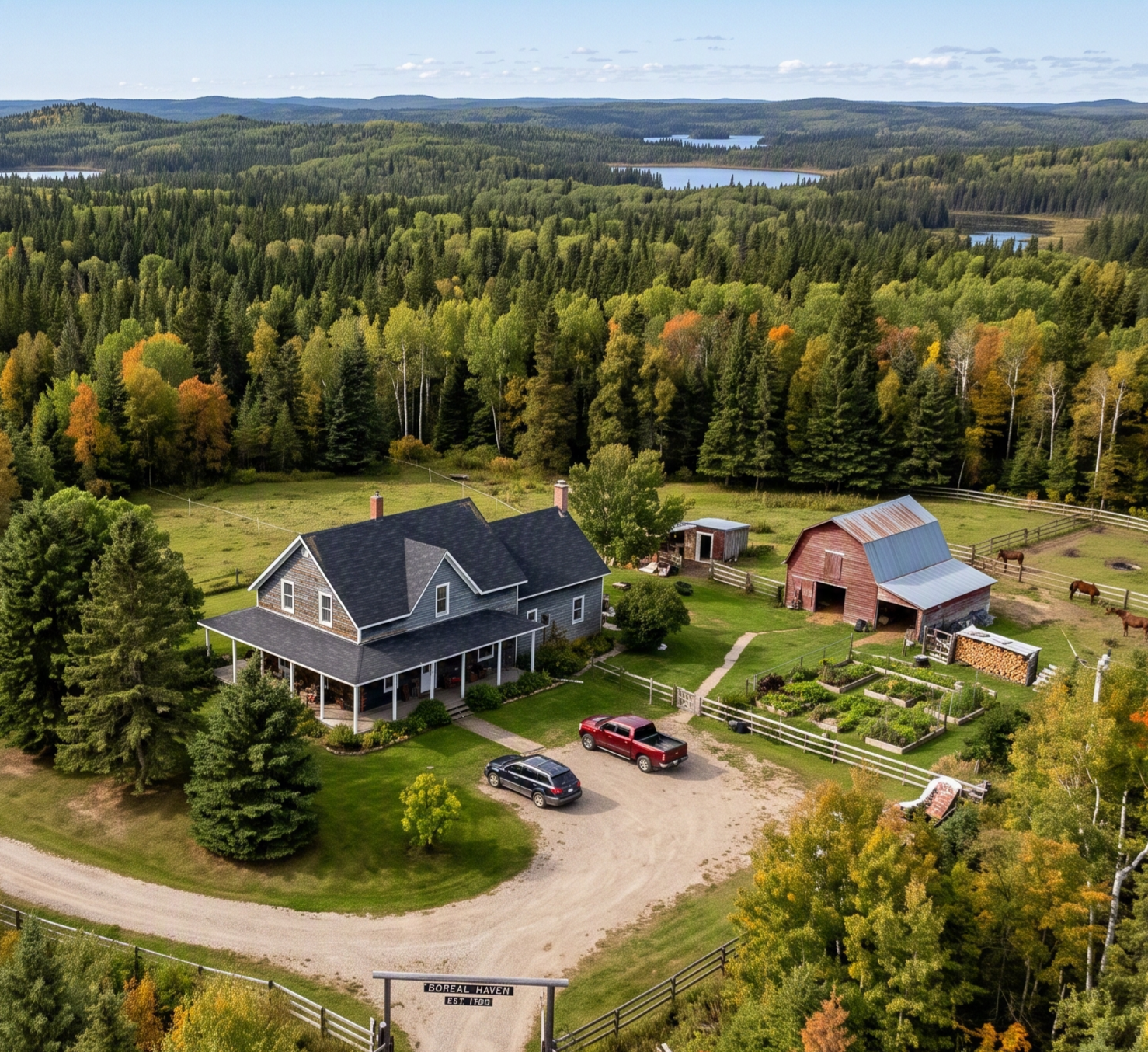
In my recent travels I have been more than a little surprised at how much rural acreage homes outside of Thunder Bay are going for these days. During covid, there was definitely an understandable surge in the demand for having a lot less neighbors. Has that desire boomeranged back in 2026? What the heck?
So let start with the headline number here. Based on sales data the median acreage property outside of municipal Thunder Bay has appreciated more then 55% since 2023. Do the math and that’s around 16% per year, compounded over three years, a great return on investment if you are lucky to own such a place.
Lets ground that number in other regional “facts”: Thunder Bay, the city, is on quite a run itself. Over 30% appreciation in that previous 36 months period, close to 9% growth compounded annually. But the rural properties are recently doing way better relatively speaking.
Before 2023, Urban TBay had the covid surge which, in hindsight was a national phenomenon and also had prices jumping almost 10% per year. (That TBay is still clocking the same rate is interesting in itself). In the same period rural non-waterfront values grew slower than the city at 8% annual growth on average. This analysis is excluding waterfront properties which would fog up the data if included.
So the question of the day is: why did rural properties go from lagging the city in value appreciation to leading it? A little color commentary though first is that i have seen the “distance penalty” decreasing somewhat in the last few years. Generally properties less than 10 minutes from downtown are valued as much or more than similar urban properties, but beyond that prices tend to decline, and at 45 minutes to an hour commute time you start to see some serious discounts. That penalty seems to be decreasing though, and there have been sales in Dorion or Nolalu that have surprised me lately by beating the discount, and selling at “closer to town” prices.
I don’t have strongly held ideas about why this is happening, or how long the trend will last. I have a few guesses…
- It might be the boomers. Demographics could be at play here. At the average age of 70 they are mostly retired, don’t have to commute, are often fairly healthy and now that their grandkids are also mostly grown, don’t feel the need to hover near the kids. Instead of downsizing they are outsiding, let call it. If that’s the case the trend should stand up for a few more years untill this demographic wave reaches the next age and stage: a condo/retirement/nursing home.
- A general social “vibe” might be driving a need for privacy and escape. Threats of economic and social disruption (real or perceived) can increase the desire for safety and serenity that best occurs well out of town. This would show up as shifting relative prices, rather than a rising tide across the whole market.
- A house is a house no matter how far. It could be that people are focused on sticker price more and geography less, so prices are converging. The more recent appearance of affordable satellite internet (everywhere) could be an underlying factor that prevented some buyers from heading out of town before. Practically, the less than 20 minutes away acreage house is often more expensive now then the similar urban house, so the additional rural buyers are bidding up what used to be the “30-40% off” places out in the boonies. So the discount might be might be more like 15% off now.
Do you have a theory? Feel free to email me
A note on methodology: These are the observations of a working appraiser and not construed as facts to rely on, and certainly not investment advice. Statistics are approximated.